9 Signs Your Gutters Need Cleaning Soon
Discover 9 signs your gutters need cleaning, including water overflow, sagging sections, stains, pests, and debris buildup that can lead to costly water damage.
GUTTER CLEANING
Damon Joao
9/7/20265 min read

Gutters are easy to overlook until water starts showing up where it should not. Catching the early signs that your gutters need cleaning can help prevent unnecessary overflow and exterior wear—especially in North County San Diego, where windblown dust, leaves, palm debris, seed pods, and roof sediment can accumulate even after long stretches without rain.
Your gutters have a straightforward job: collect rainwater from the roof and direct it through the downspouts and away from the property. When debris restricts that flow, water can spill over the edges, run down exterior walls, saturate landscaping, and collect near the foundation.
Some warning signs become obvious during a storm. Others develop gradually around the roofline, fascia, landscaping, or downspouts. Here are nine practical signs that it may be time to have your gutters inspected and cleaned.
1. Water Is Spilling Over the Gutter Edges
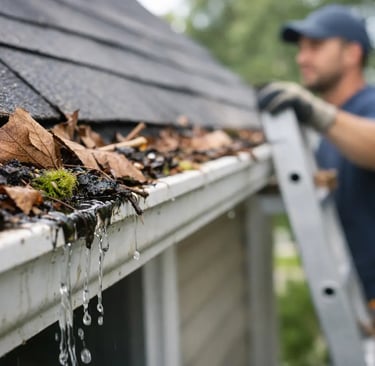
Water pouring over the front or sides of a gutter during rain is one of the clearest signs of restricted flow. Leaves, twigs, palm debris, and roof sediment can compact inside the gutter and create a blockage that prevents water from reaching the downspout.
Overflow at only one corner can still indicate a problem. Debris may be concentrated near a downspout opening, or the gutter may have a low spot where water collects. Cleaning can address accumulated debris, but persistent overflow after cleaning may point to another drainage or gutter-system issue.
2. Little or No Water Is Coming From a Downspout
During steady rain, water should discharge through the downspouts. If water is entering the gutter but very little is coming out below, the blockage may be inside the downspout rather than visible in the open gutter channel.
Downspout clogs can be difficult to identify from the ground. Small leaves, roof grit, and compacted organic debris may settle inside bends or connections and restrict the system even when the upper gutter looks relatively clear.
3. Debris Is Visible Along the Gutter Line
Leaves, twigs, seed pods, palm fibers, and other material sticking above the gutter edge are straightforward signs that cleaning is due. Visible debris usually represents only the upper layer; additional material may be packed more tightly beneath it.
North County gutters often collect windblown dirt and roof sediment in addition to larger debris. A gutter does not need to look completely full to drain poorly. Even a shallow layer of compacted material can slow water and contribute to standing moisture.
4. Plants Are Growing From the Gutters
Weeds, grass, or small sprouts growing along the roofline mean the debris has remained long enough to create soil-like conditions. Seeds settle into decomposing organic material, and retained moisture allows them to take root.
At this stage, the gutter is overdue for cleaning. The added weight of wet debris and plant growth can also place unnecessary strain on brackets, seams, and fasteners.
5. The Gutters Are Sagging or Pulling Away
Wet debris and standing water are heavy. When that weight remains in the gutter, sections may begin to sag or pull away from the fascia. You may notice an uneven gutter line, gaps behind the gutter, or areas that appear lower than the surrounding sections.
Cleaning may remove the weight contributing to the problem, but it cannot correct every structural issue. Loose fasteners, damaged brackets, improper pitch, or separated sections may require repair by a qualified gutter professional.
6. Stains or Deterioration Are Appearing Near the Roofline
Dark streaks on the fascia, siding, or stucco below a gutter can indicate repeated overflow or splash back. Peeling paint, cracked caulking, or wood that appears discolored or soft may also suggest that the area has remained wet longer than it should.
Not every exterior stain comes from a clogged gutter, but marks that worsen after rain deserve attention. Cleaning can restore water flow when debris is the cause, while damaged paint, wood, caulking, or stucco may need separate repair.
7. Pests Are Gathering Around the Gutters
Clogged gutters can hold moisture and organic debris, creating attractive conditions for insects, birds, and rodents. Increased activity around the roofline, nesting material near a downspout, or insects gathering around standing water may indicate that debris has been sitting in the gutter.
Gutter cleaning is not pest control, but removing retained debris and standing water can eliminate some of the conditions that attract unwanted activity.
8. Soil or Mulch Is Washing Away Below the Roof Edge
If soil is eroding, mulch keeps washing away, or plants are being flattened beneath the same section of roofline, water may be spilling over the gutter instead of traveling through the downspout.
Repeated overflow can also leave dirt splashed onto stucco, siding, walkways, and lower windows. Following the pattern upward may help identify the gutter section that is not draining correctly.
9. Water Is Pooling Near the Foundation
Pooling near the foundation does not automatically mean the gutters are clogged. Grading, downspout placement, and the overall drainage layout also affect where rainwater collects. However, overflowing gutters can contribute to the problem by dropping a large amount of roof runoff directly beside the home.
If water consistently gathers near the house after rain, inspect the gutter flow as part of a broader look at the property’s drainage. Cleaning can remove debris-related restrictions, but grading or downspout-extension concerns may require a different professional.
When a Gutter Problem Requires More Than Cleaning
Gutter cleaning removes accumulated debris and helps restore water flow, but it does not repair damaged components. A gutter can remain ineffective after cleaning if it has loose fasteners, leaking seams, improper pitch, undersized sections, damaged downspouts, or drainage problems at ground level.
A responsible cleaning service should be straightforward about those limitations. Visible concerns may be identified during the work, but gutter repair, roofing problems, damaged fascia, and broader drainage issues may need evaluation by an appropriate specialist.
How Often Should Gutters Be Cleaned?
There is no universal cleaning schedule for every property. A home surrounded by trees will generally collect debris faster than one in an open area. Roof type, wind exposure, nearby palms, and the design of the gutter system also influence how frequently attention is needed.
For many North County San Diego properties, inspecting the gutters before the rainy season and after periods of heavy wind or falling debris is a practical starting point. Some homes may need professional rain-gutter cleaning once or twice a year, while others may need service more or less often based on actual conditions.
Visible warning signs matter more than an arbitrary calendar. If the gutters are overflowing, draining slowly, sagging, or holding visible debris, waiting for the next storm only puts more water through an already restricted system.
Why Professional Gutter Cleaning May Be the Safer Choice
Gutter cleaning can involve ladders, roof edges, wet debris, tile roofing, uneven ground, and hard-to-reach sections. Those conditions make safety an important part of the decision, especially on multi-story homes or properties with limited access.
A careful service removes accumulated debris, checks whether water can move through the gutter and downspout system, and avoids unnecessarily stressing the gutters or surrounding exterior surfaces. Nearby siding, windows, landscaping, and outdoor areas should also be treated with care throughout the process.
Clarity Pro Wash provides professional rain-gutter cleaning throughout San Marcos and North County San Diego. If you have noticed overflow, visible debris, sagging sections, or slow drainage, get your instant estimate to explore the appropriate cleaning options for your property.
A gutter packed with wet leaves and debris is already overflowing instead of directing water toward the downspout—one of the clearest signs that cleaning is overdue.
© 2026. All rights reserved.
Whatever you do, work at it with all your heart, as working for the Lord, not for men. - Colossians 3:23
Clarity Pro Wash
Serving San Marcos & North County San Diego
Call or Text: (760) 420-5712
Email: damon@clarityprowash.com