House Washing for Stucco Homes Done Right
House washing for stucco homes done right requires a gentle, surface-safe approach. Learn how to remove dirt, algae, stains, and mineral buildup without damage while protecting texture, finish, and curb appeal in North County San Diego.
SOFT WASHING
Damon Joao
6/10/20265 min read
House Washing for Stucco Homes Done Right
Stucco can make a home look clean, solid, and high-end - right up until dirt settles into the texture, algae starts showing on shaded walls, and sprinkler overspray leaves behind ugly mineral stains. That is why house washing for stucco homes takes a different approach than cleaning vinyl, brick, or painted siding. Done correctly, it refreshes curb appeal and protects the finish. Done carelessly, it can leave streaks, surface damage, or force water where it should not go.
In North County San Diego, stucco is everywhere for a reason. It holds up well in our climate, fits the local style, and gives homes a durable exterior. But it also collects dust, cobwebs, traffic film, and organic growth over time. Coastal moisture, marine air, inland heat, and irrigation can all leave a mark. If your home is starting to look dingy even after a quick rinse, the issue usually is not just surface dust. It is buildup that needs the right cleaning method.
Why stucco needs a different washing method
Stucco is not a smooth, nonporous surface. It has texture, tiny voids, and a finish that can hold onto grime more than homeowners expect. That texture is part of its appeal, but it is also what makes cleaning tricky. High pressure can break the surface, scar the finish, or force water into cracks and weak spots.
This is where many people go wrong. They assume a pressure washer will solve the problem faster. On concrete, that may be true. On stucco, it depends on the condition of the wall, the age of the finish, and what is growing or staining the surface. In many cases, a soft wash approach is the safer option because it relies more on the proper cleaning solution and controlled rinsing than brute force.
A professional will also pay attention to the type of staining. Dust and cobwebs clean differently than algae. Rust stains from irrigation or metal fixtures need a different treatment than black streaking under rooflines. There is no one-setting-fits-all method for stucco.
House washing for stucco homes: what actually works
The safest and most effective house washing for stucco homes usually starts with an inspection. Before any cleaning begins, the exterior should be checked for cracks, loose areas, failed caulking, fragile paint, and spots where water intrusion may already be a concern. Cleaning a damaged wall without that step can make a small issue worse.
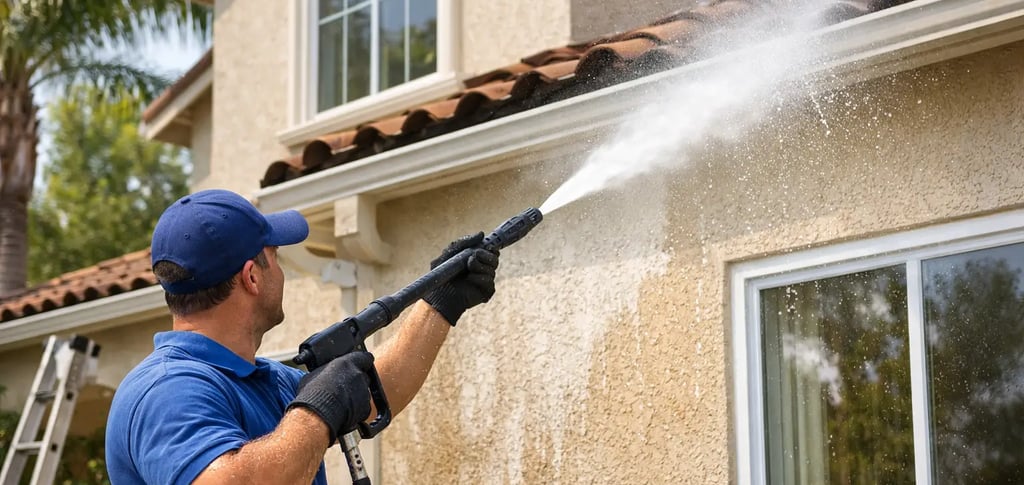
Once the surface is evaluated, the cleaning process should be matched to the home. In most cases, that means low-pressure application of a cleaning solution designed to break down organic growth, dirt, and buildup. After it has time to work, the wall is rinsed carefully with controlled pressure. The goal is simple: remove contamination without beating up the stucco.
That controlled part matters. Too little cleaning power can leave behind staining and lead to uneven results. Too much pressure can etch the finish or knock off weak areas. A good wash balances chemistry, dwell time, rinse technique, and surface condition.
For homeowners, the visible benefit is immediate. Colors look brighter, trim stands out again, and the whole property looks better maintained. But there is also a maintenance benefit. Removing algae, mildew, and grime helps keep the exterior from aging faster than it should.
Common stucco stains and what they mean
Not every dirty-looking wall has the same problem. Brown or gray film is often a mix of dust, pollution, and moisture. Green areas usually point to algae or mildew, especially on shaded or damp sides of the home. White chalky deposits can come from hard water or efflorescence. Rust-colored marks may be tied to sprinkler systems, metal fixtures, or runoff.
The reason this matters is simple: if you treat every stain the same way, results suffer. Some spots rinse off easily. Others need specialty treatment and careful handling to avoid changing the color or texture of the finish. Painted stucco also adds another layer of caution, since older paint can oxidize or lift if the cleaning is too aggressive.
This is one reason homeowners sometimes feel frustrated after trying to wash the house themselves. They may remove loose dirt but still see streaks, shadowing, or stubborn discoloration. That usually means the wall needs more than water alone.
The risks of using too much pressure on stucco
Pressure washing has its place, but stucco is one of those surfaces where more pressure is not automatically better. If the nozzle is too close or the PSI is too high, the finish can chip, crack, or erode. Water can also be driven behind the exterior around windows, vents, trim, or existing hairline cracks.
That can create bigger problems than the dirt you started with. Moisture intrusion can lead to hidden damage, peeling paint, or mold issues if the wall system does not dry properly. Even when the damage is not dramatic, high pressure can leave obvious cleaning lines or a roughened appearance that takes away from the home’s finish.
For that reason, homeowners should be careful about rental machines and one-size-fits-all advice online. A pressure washer in the wrong hands can turn a cleaning project into a repair project fast.
When soft washing makes more sense
Soft washing is often the better fit for stucco because it is designed for more delicate exterior materials. Instead of relying on force, it uses low pressure and cleaning solutions to loosen and kill organic growth at the source. That matters when mildew or algae is the real issue, not just surface dirt.
It also tends to produce a more even result on textured walls. Because the solution does the heavy lifting, the rinse can be gentler and more controlled. On homes with painted stucco, older finishes, or vulnerable trim and seals, that lower-impact approach is often the smartest route.
That said, soft washing is not just spraying soap and hoping for the best. It still requires the right mix, the right dwell time, and attention to nearby landscaping, fixtures, and sensitive surfaces. The method is gentle on the wall, but it should still be handled professionally.
How often should stucco be washed?
For many homes in North County San Diego, a professional wash every 12 to 18 months is a reasonable range. But the real answer depends on location and exposure. Homes near the coast may deal with more moisture and salt air. Homes near busy roads can collect more dust and traffic film. Properties with heavy tree cover, shaded walls, or aggressive sprinkler overspray may need cleaning sooner.
The better rule is to watch the surface, not just the calendar. If the stucco is losing its color, showing green growth, developing dark streaks, or making the whole property look tired, it is probably time. Waiting too long can allow stains to set deeper and make restoration more difficult.
What homeowners should look for in a professional service
If you are hiring out house washing for stucco homes, ask how the company cleans stucco specifically. That question alone tells you a lot. You want a provider that talks about surface condition, low-pressure methods, stain type, and protecting the home - not someone who only talks about blasting everything clean.
It also helps to work with a company that understands local conditions. In this area, cleaning methods should account for sun exposure, coastal air, irrigation staining, and the materials common to homes in communities like San Marcos, Carlsbad, Encinitas, Escondido, Oceanside, Poway, and Vista. A local company that regularly works on stucco homes will usually spot trouble areas faster and choose the right approach from the start.
Clear communication matters too. Homeowners should know what can reasonably be removed, what may be permanent, and whether repairs should be addressed before washing. Honest expectations are part of good service.
Clarity Pro Wash takes that kind of surface-specific approach because the goal is not just to make a house look cleaner for a day. It is to improve the appearance while protecting the finish homeowners have already invested in.
A clean stucco exterior should look refreshed, not stressed
The best stucco cleaning does not call attention to the process. It simply makes the home look well cared for again. The walls look brighter, stains are reduced or gone, and the exterior feels maintained instead of weathered.
If your stucco has started to look dull, streaked, or uneven, the answer is not always more pressure. Most of the time, it is a smarter method. A careful wash can restore the look of the home without putting the surface at risk, and that is the kind of result worth doing right.
Contact Information
Ready to brighten your home’s exterior?
Call
© 2025. All rights reserved.
Whatever you do, work at it with all your heart, as working for the Lord, not for men. -Colossians 3:23