How to Wash Tile Roof Safely
Learn how to wash a tile roof safely using proper equipment, low-pressure soft washing techniques, and proven cleaning methods. Discover the best tools, cleaning solutions, and precautions to remove algae, moss, and stains while protecting your roof's integrity, extending its lifespan, and enhancing
ROOF CLEANING
Damon Joao
6/23/20266 min read
How to Wash Tile Roof Safely
A tile roof can make a home look sharp for decades, but the wrong cleaning method can crack tiles, strip protective finishes, and create leaks you do not see until the next rain. That is why homeowners asking how to wash tile roof safely should start with one simple rule: the goal is not just to make the roof look cleaner, but to protect the roof while you clean it.
In North County San Diego, tile roofs deal with more than dust. Coastal moisture, shade, debris, and organic growth can leave dark streaks, mossy patches, and buildup in valleys and around edges. Cleaning helps curb appeal, but safety comes first - for both the person doing the work and the roof itself.
Why tile roofs need a different cleaning approach
Tile is durable, but it is not indestructible. Concrete and clay tiles can handle years of exposure, yet they are still vulnerable to impact, concentrated pressure, and careless foot traffic. A method that might work on a driveway can do real damage on a roof.
This is where many DIY attempts go wrong. Homeowners often assume more pressure means faster results. On a tile roof, high pressure can force water under the tiles, chip edges, dislodge ridge caps, and shorten the life of the roof. Even if the surface looks clean right away, the hidden damage can cost far more than the staining ever did.
A safer approach usually means low pressure, the right cleaning solution, controlled rinsing, and very limited walking on the roof. The best method depends on the roof's age, pitch, tile condition, and the type of growth you are dealing with.
How to wash tile roof safely without causing damage
Before any cleaning starts, inspect from the ground. Look for cracked or slipped tiles, heavy debris, clogged valleys, and areas with visible moss or black algae staining. If the roof is steep, fragile, or already showing damage, that is a strong sign to leave it to a professional.
The next step is choosing the right day. Dry, mild weather is best. A wet roof is slippery, and windy conditions make ladder work less stable. In coastal and inland parts of San Diego County, early morning moisture can linger longer than people expect, especially on shaded roof sections.
If you are handling a small section yourself, use proper ladder safety and avoid standing directly on tile whenever possible. Tile roofs are not designed for casual foot traffic. Stepping in the wrong spot can break a tile or shift it just enough to create a future problem. If walking is unavoidable, it needs to be done carefully and with an understanding of where weight can be distributed with the least risk.
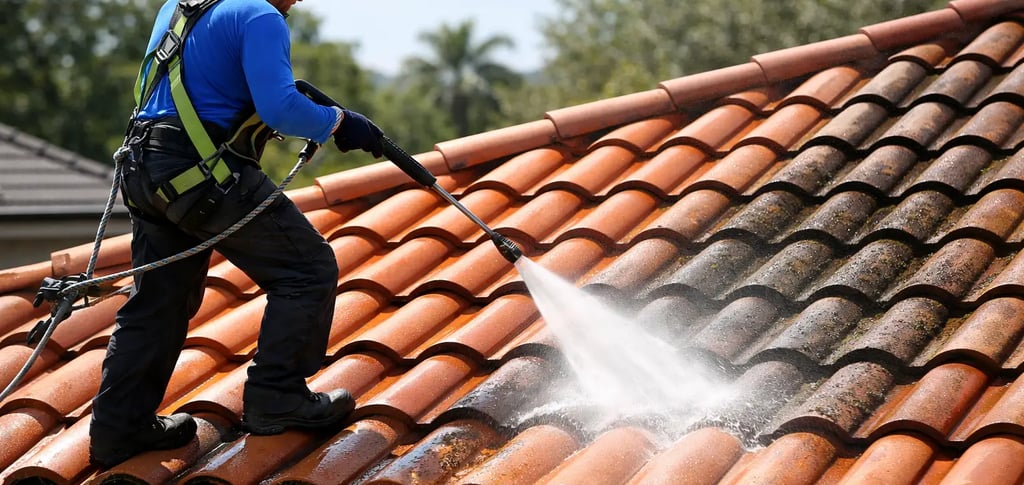
For actual cleaning, soft washing is typically the safest method. That means applying a roof-safe cleaning solution that breaks down algae, mold, mildew, and grime, then rinsing gently with low pressure. The cleaning agents do the heavy lifting, not brute force from the hose.
This matters because staining on tile roofs is often organic. Black streaks, green film, and moss are not just sitting on the surface. They are growing into it. A pressure-only approach may remove the visible layer while leaving spores behind, which leads to faster regrowth.
What to avoid when cleaning a tile roof
If you remember nothing else, remember this: do not blast a tile roof with a pressure washer at close range. That is one of the fastest ways to turn a maintenance job into a repair job.
High pressure can erode the surface of concrete tile, crack older clay tile, and push water beneath the overlap. It can also strip away coatings that help the roof resist weathering. The roof may look clean for a few weeks, but the long-term cost can be significant.
You also want to avoid harsh chemicals that are not intended for roofing materials. Some cleaners can discolor tile, damage surrounding plants, or corrode metal flashing and gutters. Roof cleaning products need to be chosen with the roofing material and the landscape in mind.
Another common mistake is scraping aggressively at moss or lichen. It is tempting to attack thick growth by hand, but that can chip tile surfaces and loosen pieces around edges and ridges. A treatment-first approach is usually safer than force.
The basic process for safe tile roof washing
A careful cleaning job starts by removing loose debris such as leaves and small branches from valleys, edges, and gutters. This is usually done by hand or with gentle tools rather than blowing debris all over the property.
After that, surrounding landscaping should be prepped and protected. Cleaning runoff can affect plants, so nearby vegetation should be watered and monitored. Gutters and downspouts should also be checked so water can move away properly during rinsing.
The roof cleaning solution is then applied evenly to the affected areas. The right dwell time matters. If it is rinsed too soon, it may not fully break down the buildup. If it sits too long in strong sun, results can become inconsistent. This is one reason experienced technicians tend to get more even, longer-lasting results.
Once the growth has been treated, the roof is rinsed with low pressure if needed. In some cases, especially with soft wash methods, the treatment continues working after application and weathering helps finish the process over time. That can be the safer choice on more delicate or aged tile roofs.
The final step is checking the roof and cleanup around the property. Good roof washing is not just about the tiles themselves. Overspray, runoff, debris, and gutter discharge all need attention.
When DIY makes sense and when it does not
There is a difference between rinsing a small accessible section and taking on a full roof cleaning. If the roof is low-slope, lightly soiled, easy to access, and in solid condition, a very cautious homeowner may be able to handle minor cleaning with the right equipment and low-pressure technique.
But many tile roofs are poor DIY candidates. Steep slopes, second-story heights, fragile older tiles, significant moss growth, or widespread black streaking all raise the risk level. So does any roof where you are not fully confident in moving safely or identifying damage.
For most homeowners, the bigger question is not whether the job is technically possible. It is whether the risk makes sense. A fall hazard, broken tile, or water intrusion issue can wipe out any savings quickly.
That is why professional soft washing is often the better route for tile roofs. A company that understands roof-specific cleaning can evaluate the condition of the tile, use the right solution strength, manage runoff, and avoid the high-pressure mistakes that cause damage. For local homeowners, this is exactly the kind of work Clarity Pro Wash handles with a surface-safe approach.
Signs your tile roof should be cleaned soon
Not every stain is urgent, but waiting too long can make the job harder and more expensive. If you are seeing black streaks, green patches, moss growth, debris buildup in roof valleys, or a roof that looks dull and uneven compared to the rest of the home, it is probably time to act.
Beyond appearance, organic growth can hold moisture against the roof surface. Over time, that can contribute to deterioration, especially in shaded spots where the roof stays damp longer. Regular cleaning helps protect curb appeal, but it also supports the long-term condition of the roof.
In areas like San Marcos, Encinitas, Vista, and nearby communities, local conditions vary. Homes closer to the coast may deal with more marine moisture, while inland neighborhoods often see dust, heat, and debris accumulation. The cleaning schedule that makes sense for one property may not be right for another.
How often should a tile roof be washed?
There is no one-size-fits-all answer. Some tile roofs may only need cleaning every few years, while others develop visible buildup much sooner because of shade, tree coverage, or moisture patterns. A home with north-facing roof sections and overhanging trees will usually need more attention than a roof in full sun with minimal debris.
The best approach is to watch the roof before the staining gets severe. Light maintenance at the right time is usually safer and more cost-effective than waiting until growth is thick and widespread.
A good rule is to pay attention after wet seasons and check the roof from the ground a few times a year. If staining is spreading or debris is collecting in problem areas, addressing it early is the smart move.
A clean tile roof should never come at the cost of the roof itself. If you keep the method gentle, avoid unnecessary pressure, and respect the safety risks involved, you protect both your home and your investment. When the roof is high, fragile, or heavily stained, the safest decision is often knowing when not to do it yourself.