Pressure Washing That Cleans Without Damage
Pressure washing can transform homes and businesses fast, but the right method matters. Learn what to clean, what to avoid, and why proper pressure washing techniques help prevent costly damage, protect surfaces, and improve curb appeal.
PRESSURE WASHING
Damon Joao
6/7/20266 min read
Pressure Washing That Cleans Without Damage
A driveway covered in black streaks, green algae along a patio, dirt clinging to stucco, and overflowing gutters can make a well-kept property look tired fast. Pressure washing is one of the most effective ways to restore curb appeal, but getting a strong result without damaging surfaces depends on using the right method for the right area.
That is where many property owners run into trouble. Not every exterior surface should be cleaned with high pressure. Concrete can often handle it. Roof shingles usually should not. Painted siding, stucco, wood, tile, and gutters all need a more careful approach. The real goal is not just to make a property look cleaner for a few days. It is to remove buildup safely, protect the surface underneath, and leave the home or business looking well maintained.
What pressure washing actually does
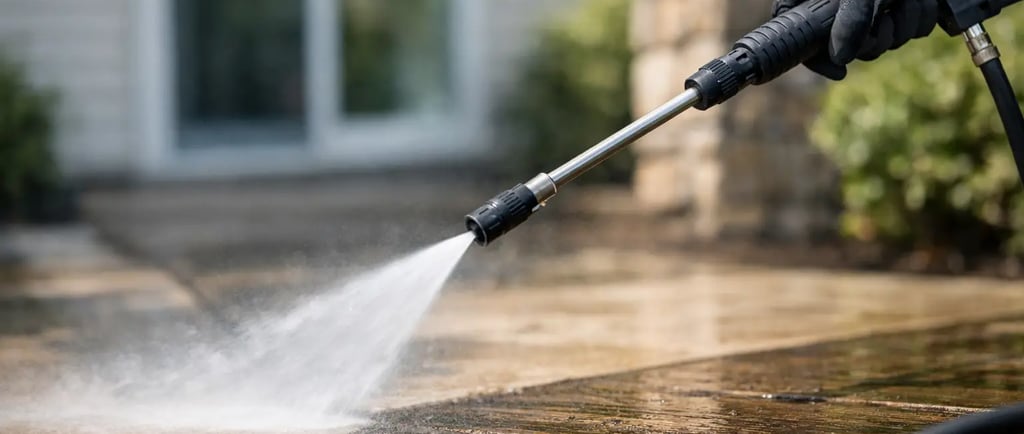
Pressure washing uses pressurized water to break loose dirt, grime, algae, mildew, mud, and surface stains. It works especially well on hard, durable surfaces where buildup settles deep into pores and texture. Driveways, sidewalks, retaining walls, some patios, parking areas, and other concrete surfaces are common examples.
The reason it works so well is simple. Exterior surfaces in North County San Diego take a steady beating from dust, coastal moisture, tree debris, traffic residue, irrigation overspray, and organic growth. Over time, that buildup does more than affect appearance. It can create slippery walking surfaces, stain porous materials, and shorten the clean, cared-for look that owners want to maintain.
Done correctly, pressure washing removes that layer quickly and evenly. Done carelessly, it can leave lines, scars, chipped paint, damaged mortar, gouged wood, and water forced into places it should never go. That is why experience matters just as much as equipment.
Pressure washing vs soft washing
One of the biggest misconceptions in exterior cleaning is that more pressure always means a better clean. In practice, that is rarely true. The better standard is using the lowest effective pressure with the right cleaning solution and technique.
Soft washing is often the safer choice for delicate or finished surfaces. Instead of relying on force alone, it uses low pressure and specialized cleaning solutions to treat mold, algae, mildew, and grime at the source. That makes it a strong option for roof cleaning, many house washing projects, painted surfaces, stucco, siding, and other materials that can be damaged by aggressive pressure.
This is especially important with roof surfaces. Asphalt shingles, tile roofs, and similar materials can be harmed by high pressure. Granule loss, lifted edges, cracked tile, and shortened roof life are real risks when the wrong method is used. Soft washing cleans the growth without putting the roofing system through unnecessary stress.
For homeowners and property managers, that trade-off matters. A surface can look clean after high-pressure blasting, but if the finish is stripped or the material is weakened, the short-term result is not worth the long-term cost.
Where pressure washing makes the most sense
Some areas are great candidates for pressure washing because they are durable and collect heavy buildup. Concrete driveways are a good example. Oil marks, tire residue, dirt, algae, and weather staining can leave concrete looking older than it is. A proper cleaning can brighten the entire front of the property.
Sidewalks, pool decks, pavers, block walls, and many patios also benefit when the equipment is adjusted to the surface and the operator understands how to clean evenly. Commercial spaces often need the same kind of work. Storefront walkways, dumpster pad areas, entry zones, and exterior concrete around business properties build up grime quickly and affect first impressions.
Even then, there is no one-size-fits-all setting. Older concrete may need a different approach than newer flatwork. Decorative finishes require more care than plain gray slabs. Pavers may need attention around joint sand and edging. The right result comes from understanding the surface, not just spraying it harder.
Where a softer approach is smarter
House exteriors are a common example of where property owners assume pressure washing is the answer, even when soft washing is the better fit. Stucco, vinyl siding, painted wood, trim, soffits, and exterior fascia can all be cleaned effectively with lower pressure. The goal is to remove organic growth and surface grime without forcing water behind the material or damaging the finish.
The same principle applies to fences, decks, and patio covers. Wood in particular can be tricky. Too much pressure can leave visible marks, raise the grain, and create a rough, uneven appearance. A more controlled method protects the material while still improving the look.
Rain gutters also need a careful hand. Exterior brightening can help remove tiger striping and staining, but gutter cleaning itself often involves both debris removal and a wash process suited to the gutter material and condition. Safety matters here too, especially on multi-story properties.
Why local conditions matter in North County San Diego
Exterior cleaning is never just about the surface. It is also about the environment around it. In North County San Diego, homes and businesses deal with a mix of inland dust, coastal air, seasonal moisture, tree litter, irrigation mineral deposits, and algae growth in shaded areas. Properties near the coast may see different staining patterns than those farther inland, while homes with mature landscaping often collect debris and organic buildup more quickly.
That means the cleaning plan should match the local conditions. A patio in Encinitas may need a different treatment than a driveway in Escondido. A storefront in Oceanside may face salt air and foot traffic, while a home in San Marcos may be dealing with roof streaks, dusty stucco, and clogged gutters. Good exterior cleaning is practical. It responds to what is actually on the property and what the material can safely handle.
What professional pressure washing should include
A quality service starts before the water is on. The surface should be evaluated for material type, condition, staining, surrounding plants, drainage, and any problem areas like cracked mortar, loose paint, oxidized siding, or fragile roof sections. That initial judgment is what prevents avoidable damage.
From there, the method should be chosen based on the surface, not based on speed. Some areas need pre-treatment. Some need a surface cleaner for an even finish. Some need soft wash application and dwell time instead of force. Some need all three in different parts of the same property.
Communication matters too. Property owners should know what is being cleaned, what results are realistic, and where stains may be permanent due to age or material wear. Honest expectations are part of professional service. Not every deep stain disappears completely, and saying otherwise helps no one.
Reliable scheduling also makes a difference. Homeowners want crews that show up on time, respect landscaping and access instructions, and leave the area cleaner than they found it. Commercial clients need work done with minimal disruption and a clear plan for entrances, walkways, and visibility. That day-to-day dependability is often what separates a local company people call once from one they trust again.
The value goes beyond appearance
Most people first think about pressure washing because they want a cleaner-looking home or business. That is a good reason, but not the only one. Removing algae and grime can improve safety by reducing slippery surfaces. Cleaning gutters helps water move where it should. Washing away buildup can also help exterior materials last longer and reduce the need for premature repairs or repainting.
For businesses, appearance has a direct effect on how customers read the property. A clean storefront, walkway, and entry area signal care and professionalism. For homeowners, exterior cleaning supports property value, especially before hosting, listing a home, or handling seasonal maintenance.
There is also a practical peace of mind that comes with staying ahead of buildup instead of waiting until the property looks neglected. Smaller, regular cleanings are often easier on surfaces than letting years of growth and staining accumulate.
Choosing the right company for pressure washing
When hiring a contractor, ask how they decide between pressure washing and soft washing. Ask what surfaces they clean most often, how they protect delicate materials, and what kind of results you should expect on your specific property. If every answer points back to high pressure, that is a red flag.
The best companies focus on proper cleaning, not just fast cleaning. They understand roofs are different from driveways, stucco is different from concrete, and a commercial property has different needs than a single-family home. They also understand that trust is earned by doing what they say, showing up when scheduled, and treating each property with care.
For property owners in North County San Diego, that kind of service matters. A clean exterior should not come with unnecessary risk. It should leave your home or business looking sharper, better cared for, and ready for whatever season comes next.
If your exterior surfaces are starting to look weathered, stained, or overdue for attention, the best next step is simple: choose a cleaning method that fits the surface, not just the stain.
Contact Information
Ready to brighten your home’s exterior?
Call
© 2025. All rights reserved.
Whatever you do, work at it with all your heart, as working for the Lord, not for men. -Colossians 3:23