Pressure Washing vs Soft Washing
Pressure washing vs soft washing — not sure which your surface needs? The wrong method can cause real damage. This guide breaks down the safer, more effective choice for roofs, siding, concrete, and commercial exteriors.
EXTERIOR CLEANING
Damon Joao
6/19/20265 min read
Pressure Washing vs Soft Washing
That black streaking on a roof in San Marcos, the green film on a shaded patio in Encinitas, or the grime building up on a storefront in Oceanside all raise the same question: pressure washing vs soft washing - which one actually makes sense for the surface you need cleaned? The short answer is that both methods have a place, but using the wrong one can do more harm than good.
A lot of property owners hear the word “pressure washing” and use it to describe any kind of exterior cleaning. In practice, professional exterior cleaning is more specific than that. Some surfaces can handle high-pressure cleaning. Others need a lower-pressure approach with cleaning solutions that remove algae, mold, mildew, and buildup without damaging the material underneath.
Pressure washing vs soft washing: what’s the difference?
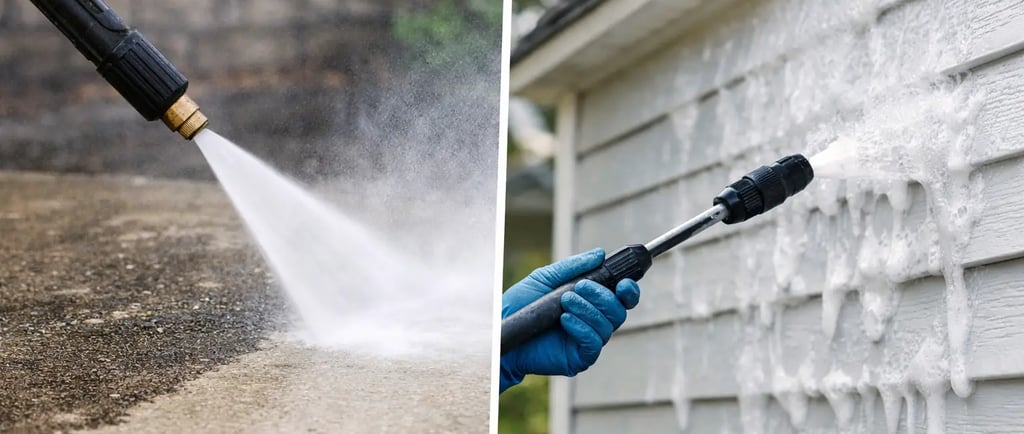
Pressure washing relies on higher water pressure to break loose dirt, stains, mud, and surface buildup. It is often the right choice for hard, durable materials like concrete driveways, walkways, certain patios, and some commercial flatwork. When the surface is strong enough, pressure can quickly restore a cleaner appearance and remove years of grime.
Soft washing uses much lower pressure and leans on specialized cleaning solutions to treat organic growth and staining at the source. Instead of blasting the surface, it applies a safer wash process that loosens and kills algae, mold, mildew, bacteria, and other contaminants. The surface is then rinsed gently. This method is typically the better fit for more delicate exteriors like roof shingles, tile roofs, painted siding, stucco, fences, and other materials that can be scarred or forced open by too much pressure.
That difference matters because exterior cleaning is not just about what looks dirty. It is about what the material can handle and what is actually causing the staining.
Why surface type matters more than the stain
One of the biggest mistakes in exterior cleaning is choosing the method based only on how bad the dirt looks. A roof covered in dark streaks may look like it needs the strongest possible spray, but those streaks are often caused by algae. High pressure may remove some visible discoloration, but it can also damage shingles, dislodge granules, or force water where it should not go.
The same logic applies to stucco and painted exterior walls. These surfaces may collect dust, cobwebs, mildew, and runoff stains, but they are not designed for aggressive pressure. A soft wash approach is usually the safer and more effective solution because it cleans the surface without rough treatment.
Concrete is a different story. Driveways, sidewalks, curbs, and many hardscapes are better candidates for pressure washing because the surface can generally tolerate stronger cleaning. Even then, technique matters. Too much pressure or poor wand control can leave visible striping, etching, or uneven cleaning patterns.
For homeowners and business owners in North County San Diego, this is especially relevant because sun exposure, coastal moisture, shade, and seasonal debris all affect how surfaces age. The right cleaning method depends on the material, the buildup, and the surrounding conditions.
When pressure washing is the right choice
Pressure washing is best for durable surfaces that need a strong mechanical cleaning action. Concrete is the most common example. Oil marks, tire residue, dirt, rust-related staining, and embedded grime on driveways and parking areas often respond well to a pressure-based cleaning process.
It is also useful for some pavers, retaining walls, heavy-use patios, dumpster pads, and commercial walkways, depending on their condition. On business properties, clean entry paths and bright flatwork help create a better first impression. For homeowners, a freshly cleaned driveway or front walkway can make the whole property look better, even before the house itself is washed.
Still, “more pressure” is not automatically better. A professional should match pressure levels to the surface and use the correct equipment, nozzles, and cleaning pattern. The goal is to clean effectively without leaving damage behind.
When soft washing is the better option
Soft washing is usually the safer answer for surfaces that are more delicate, coated, older, or vulnerable to water intrusion. Roof cleaning is a clear example. Asphalt shingles, tile roofs, and similar materials are not something you want aggressively pressure washed. Soft washing removes organic growth while protecting the roof.
House washing is another area where soft washing often makes the most sense. Stucco, painted siding, trim, soffits, screened enclosures, and exterior gutters can all benefit from lower-pressure cleaning. The same goes for many fences and decks, depending on the wood type, finish, and overall condition.
Soft washing also tends to deliver a longer-lasting clean on surfaces affected by algae or mildew because it treats the growth instead of only rinsing off what is visible on top. That matters when your goal is not just a quick cosmetic improvement, but a cleaner surface that stays cleaner longer.
Pressure washing vs soft washing for common property areas
If you are trying to decide what your own property needs, it helps to think area by area instead of looking for one method for everything.
Roofs almost always call for soft washing. This is the safest way to address black streaks, moss, algae, and grime without shortening the life of the roofing material.
Home exteriors often need soft washing too, especially if the property has stucco, painted surfaces, vinyl siding, fascia, or trim. Lower pressure reduces the risk of damage while still delivering a noticeably cleaner finish.
Driveways, sidewalks, and many concrete patios are usually strong candidates for pressure washing. These surfaces are built to handle a more forceful cleaning method, and they often need it.
Gutters are more nuanced. Exterior gutter brightening may involve soft wash techniques, while interior gutter cleaning is about debris removal and proper water flow, not just washing the outside.
Storefronts and commercial properties often need a mix of both. Concrete walkways may require pressure washing, while painted exteriors, signage areas, awnings, and building facades may be better suited to soft washing.
The risk of using the wrong method
The wrong cleaning method can create problems that cost more than the original stains ever did. High pressure on a roof can loosen protective granules, crack tiles, or void expectations for normal material life. On wood, it can gouge the surface and raise fibers. On painted exteriors, it can strip finish. On stucco, it can leave marks or force water behind the surface.
On the flip side, using only a gentle rinse where deeper concrete cleaning is needed may leave behind embedded grime and disappointing results. That is why this is not really a debate about which method is “better” overall. It is about using the right process for the right job.
A trustworthy exterior cleaning company should not push one method for every surface. It should explain why a certain approach is recommended and how that approach protects your property while improving the appearance.
What professional property owners usually care about most
Most homeowners are not comparing PSI ratings. They want to know three things: Will it look better, will it be cleaned safely, and will the service be reliable?
Commercial property managers and storefront owners tend to ask similar questions with a business lens. They want a building that looks presentable, a process that does not create avoidable damage, and scheduling that does not disrupt operations more than necessary.
That is why the real value in professional washing is not just equipment. It is judgment. Knowing when to use pressure, when to use soft washing, and when to combine methods on the same property is what separates a careful service from a risky one.
For example, a home in Vista might need a soft wash on the roof and stucco exterior, pressure washing on the driveway, and gutter cleaning to finish the job. A storefront in Carlsbad may need soft washing on the building facade and pressure washing on the front walkway. Good results come from matching the method to each surface, not forcing one approach across the board.
If you are comparing providers, ask how they determine which cleaning method to use. A clear answer usually tells you a lot. Companies that focus on property-appropriate cleaning tend to care more about long-term results than quick, high-pressure shortcuts. That is a big part of how Clarity Pro Wash approaches exterior cleaning across North County San Diego.
A clean property should not come at the expense of the surfaces you are trying to protect. If you are unsure whether a roof, wall, patio, or storefront needs pressure washing or soft washing, the best next step is simple: have the surface evaluated by someone who knows the difference and treats your property accordingly.
Contact Information
Ready to brighten your home’s exterior?
Call
© 2025. All rights reserved.
Whatever you do, work at it with all your heart, as working for the Lord, not for men. -Colossians 3:23