Roof Cleaning Maintenance Guide for Homeowners
A practical roof cleaning maintenance guide for homeowners who want to prevent damage, control algae, moss, and debris, and protect tile or shingle roofs safely. Learn essential maintenance tips and best practices to extend roof life, improve curb appeal, and avoid costly repairs.
ROOF CLEANING
Damon Joao
6/27/20265 min read
Roof Cleaning Maintenance Guide for Homeowners
That dark streaking on a roof usually does not start as a major problem. It starts quietly - algae, dust, leaves, and moisture building up over time until your roof looks older than it is. A good roof cleaning maintenance guide helps you catch those issues early, protect the surface, and avoid turning a simple cleaning job into a repair bill.
In North County San Diego, roofs deal with a mix of sun exposure, coastal moisture, windblown debris, and seasonal grime. Tile roofs, asphalt shingles, and other common roofing materials all age differently, which means maintenance should never be one-size-fits-all. The goal is not just to make the roof look better. It is to keep it functioning the way it should while using the right cleaning method for the material.
What roof maintenance really involves
Many property owners think roof maintenance means waiting until the stains are obvious, then scheduling a cleaning. In practice, maintenance is more about routine attention than occasional rescue work. A clean roof matters, but so does keeping valleys clear, checking for debris buildup, watching for moss or algae growth, and making sure gutters are not backing water onto the roof edge.
A roof can look mostly fine from the ground and still have problem areas. Leaves can collect behind chimneys or in roof transitions. Dirt can trap moisture in shaded sections. On tile roofs, debris can settle in channels where water is supposed to flow. On shingle roofs, aggressive cleaning can remove protective granules and shorten the roof's life. That is why maintenance is not just about appearance. It is about preventing unnecessary wear.
Roof cleaning maintenance guide: what to watch for
The earliest warning signs are often subtle. Black streaks usually point to algae growth. Green patches may suggest moss or other organic buildup in damp areas. Piles of leaves or pine needles can hold moisture against the surface, especially after marine layer mornings or seasonal winds.
You may also notice water spilling oddly during rain, which can mean the roof edge or gutters are clogged with debris. In some cases, the staining is cosmetic. In others, it is a signal that moisture is lingering longer than it should. That is where the trade-off matters. Waiting saves money in the short term, but buildup that sits too long can become harder to remove safely.
If your property has overhanging trees, heavy shade, or a roofline that catches windblown debris, your maintenance needs will likely be more frequent than a home with open sun exposure. Coastal areas and inland neighborhoods can also behave differently. A roof in Carlsbad or Encinitas may see more moisture-related growth, while inland dust can create its own layer of buildup in Escondido, San Marcos, and Poway.
Why the cleaning method matters
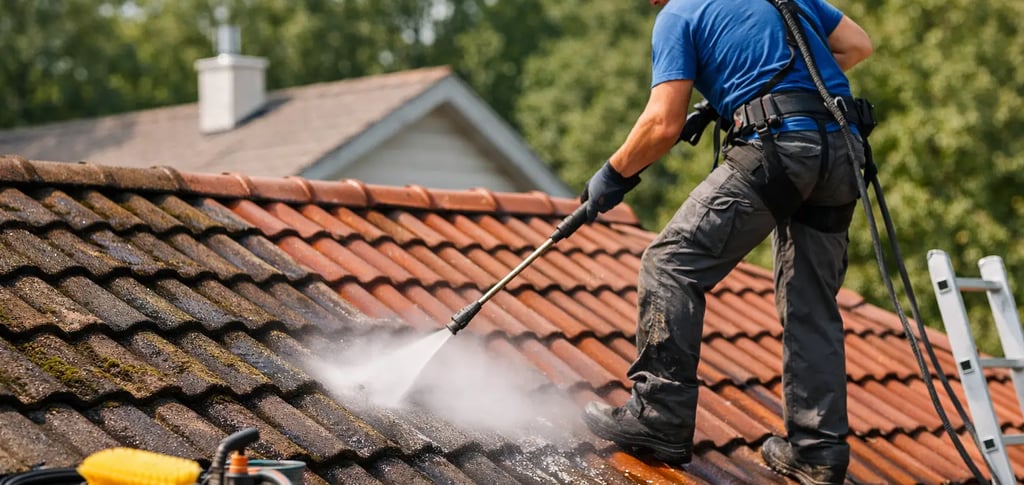
Not every roof should be cleaned the same way. This is where homeowners can make an expensive mistake by assuming more pressure means a better result. For many delicate roof surfaces, especially shingles and many tile systems, high pressure can do more harm than the staining ever did.
Soft washing is often the safer approach because it focuses on cleaning solutions and controlled rinsing rather than blasting the surface. That matters when you want to remove algae, dirt, and grime without damaging shingles, shifting tiles, or forcing water into places it should not go. Pressure washing may have a place on certain hard exterior surfaces, but roofs require more caution.
It also depends on the condition of the roof. An older roof may need an even gentler approach. A newer roof with light staining may clean up well with less intervention. The right method comes down to roof type, age, pitch, buildup, and surrounding conditions.
How often should a roof be cleaned?
There is no universal schedule, but most homeowners benefit from having their roof visually checked at least once or twice a year. Cleaning frequency depends on the environment around the property and how fast organic growth returns.
If your roof is under trees, near heavy landscaping, or prone to algae, annual attention may make sense. If it stays relatively clear and gets good sun, the interval may be longer. What matters most is not sticking to a rigid calendar. It is catching buildup before it becomes deep staining or causes water flow problems.
For commercial properties, appearance often plays a bigger role in timing. Storefronts, offices, and managed properties may need a more proactive schedule simply because curb appeal affects how the property is perceived. Clean exterior surfaces signal that the property is cared for.
Safe maintenance habits between professional cleanings
A practical roof cleaning maintenance guide should include what owners can do without creating new risks. The first rule is simple: do not treat roof cleaning as a casual weekend project. Walking on a roof can crack tiles, loosen materials, and create a fall hazard.
What you can do is monitor the roof from the ground. After windy days, check for visible debris. Look at roof valleys, edges, and shaded sections with binoculars if needed. Pay attention to gutters and downspouts, because a clogged drainage system often points to roof debris as well.
Tree trimming also plays a role. Branches that hang over the roof drop leaves, trap moisture, and create shaded areas where growth holds on longer. Trimming back limbs can reduce future buildup and limit rubbing damage during wind.
Another smart habit is to photograph the roof from a few angles once or twice a year. This gives you a simple record of whether stains are spreading, debris is collecting faster, or problem areas are starting to form.
When professional service is the better choice
Once buildup is established, especially on tile or shingle roofs, professional cleaning is usually the safer option. The main reason is not convenience. It is surface protection. The wrong cleaner, too much pressure, or poor foot traffic on the roof can cause damage that costs far more than proper maintenance.
A professional can also spot issues a homeowner may miss, such as broken tiles, heavy debris in drainage areas, or signs that roof staining is linked to a larger moisture problem. Good service should come with clear communication about the method being used and why it fits your roof.
For homeowners in North County San Diego, this matters because local conditions vary block by block. Coastal moisture, inland dust, and tree coverage all affect how roofs age and how they should be cleaned. Companies like Clarity Pro Wash build their approach around that local reality, using safe soft wash methods where the surface calls for it rather than treating every roof the same.
Common mistakes to avoid
The biggest mistake is waiting too long because the roof is out of sight. Minor staining can turn into heavier growth, and debris that seems harmless can hold moisture where it should not.
The second is using pressure without understanding the roofing material. What works on concrete can be too aggressive for shingles or certain tile conditions. A roof should be cleaned for preservation first and appearance second.
The third is focusing only on the visible surface. Gutters, roof edges, and drainage paths matter just as much. If water cannot move off the roof correctly, cleaning the stains alone does not solve the real issue.
Roof cleaning maintenance guide for long-term protection
The best roof maintenance plan is simple, consistent, and appropriate for the material. Watch for staining, debris, and drainage issues. Keep surrounding trees in check. Do not assume every dark mark is harmless, but do not assume every roof needs aggressive cleaning either.
A well-maintained roof supports curb appeal, helps prevent avoidable wear, and gives you a better chance of addressing small issues before they become expensive ones. If you are not sure what your roof needs, that uncertainty is usually the sign to have it assessed before the buildup gets worse.
A clean roof should never come at the cost of a damaged one. The right approach is the one that keeps your property looking sharp while respecting the surface that protects it every day.