Commercial Building Exterior Cleaning That Lasts
Commercial building exterior cleaning protects curb appeal, extends surface life, and enhances first impressions. Learn how to plan safe, reliable service for your property.
EXTERIOR CLEANINGCOMMERCIAL CLEANING
Damon Joao
8/2/20265 min read

Commercial Building Exterior Cleaning That Lasts
A stained storefront, darkened walkway, or algae-covered stucco wall can change how customers view a business before they reach the door. Commercial building exterior cleaning is not just about making a property look better for a day. Done correctly, it removes the buildup that can wear down surfaces, create slippery areas, and make an otherwise well-run business appear neglected.
For business owners and property managers in North County San Diego, exterior maintenance also comes with local challenges. Coastal moisture, marine air, dust, irrigation overspray, tree debris, and seasonal rain can leave visible marks on concrete, stucco, roofs, awnings, and entryways. The right cleaning plan protects the property while helping it present a clean, professional appearance year-round.
Why a Clean Exterior Matters to Your Business
Your building is part of the customer experience. A clean entrance tells visitors that the business pays attention to details. A dirty sidewalk, overflowing gutter, or mildew-streaked facade can send the opposite message, even when the service inside is excellent.
Curb appeal matters for more than retail storefronts. Office buildings, medical practices, restaurants, multifamily properties, warehouses, churches, and professional service locations all benefit from a well-maintained exterior. Tenants want to operate from a property that looks cared for, employees appreciate clean common areas, and visitors feel more confident walking into a building that appears orderly.
There is also a practical maintenance reason to act early. Organic growth such as algae, mold, and mildew holds moisture against many exterior materials. Leaves and debris can clog gutters and drains. Oil spots, gum, and grime collect on high-traffic concrete. While cleaning cannot fix existing structural damage, removing buildup regularly helps prevent small appearance issues from becoming larger maintenance concerns.
Commercial Building Exterior Cleaning Is Not One-Method Work
A common mistake is assuming every dirty surface needs high-pressure washing. Pressure has its place, especially on durable concrete, curbs, and certain hardscape areas. But using too much pressure on the wrong material can etch concrete, damage painted finishes, force water behind siding, disturb mortar, or scar delicate surfaces.
Professional commercial building exterior cleaning starts with identifying what is being cleaned and what caused the staining. A shaded stucco wall with algae requires a different approach than a grease-stained restaurant walkway. Tile roofing, painted trim, vinyl, awnings, solar panels, masonry, and decorative stone all have different cleaning needs.
Soft Washing for Delicate Surfaces
Soft washing uses low pressure and appropriate cleaning solutions to treat organic growth, dirt, and discoloration without relying on force alone. It is often the better option for painted surfaces, stucco, siding, roof materials, and other areas that could be damaged by aggressive pressure.
The goal is to let the treatment do the cleaning, then rinse carefully. This approach is especially valuable for buildings with tile roofs, shingle roofs, older exterior finishes, or landscaping close to the structure. A responsible crew protects surrounding plants, manages runoff, and adjusts the process to the property rather than applying the same method everywhere.
Pressure Washing for Concrete and High-Traffic Areas
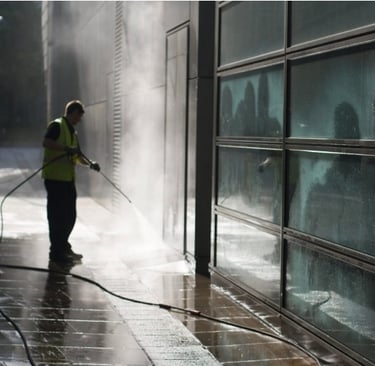
Sidewalks, drive lanes, dumpster pads, patios, breezeways, and parking areas often need a stronger cleaning method. These areas collect vehicle residue, tracked-in dirt, chewing gum, food spills, and irrigation stains. Proper pressure washing can restore a cleaner, brighter appearance and improve traction where slick growth has developed.
Even then, the right equipment and technique matter. Uneven pressure can leave visible striping on concrete. Excessive force can damage aging surfaces or push debris into nearby drains. A commercial cleaning crew should assess the condition of the concrete and use a method that produces consistent results without unnecessary wear.
What a Smart Exterior Cleaning Plan Covers
The best service plan is based on the property, not a generic checklist. A small storefront may need the entrance, window side walls, sidewalk, and awning cleaned on a regular schedule. A larger office or retail center may need building washes, common-area concrete cleaning, gutters, roof cleaning, and recurring service for multiple tenant entrances.
Most commercial properties benefit from reviewing these areas:
Building walls, stucco, siding, trim, and exterior entry areas
Sidewalks, patios, breezeways, curbs, and concrete pads
Storefronts, awnings, signs, loading areas, and dumpster enclosures
Rain gutters, roof edges, and drainage paths
Areas affected by shade, irrigation overspray, trees, or heavy foot traffic
Not every surface needs cleaning at the same time. For example, a restaurant entrance may need attention more frequently than the rear wall of the building. A property under mature trees may need gutter cleaning before the rainy season, while a sunny office complex may primarily need periodic concrete cleaning and spot treatment around irrigated landscaping.
How Often Should a Commercial Property Be Cleaned?
It depends on the building's use, exposure, and standards for appearance. A busy retail location or restaurant may need quarterly exterior touch-ups or more frequent walkway service. An office building with moderate traffic may be well served by a semiannual or annual full exterior cleaning, with targeted maintenance between visits.
Properties near the coast can develop salt residue and moisture-related growth more quickly. Shaded locations tend to see algae and mildew sooner than buildings with full sun exposure. Frequent irrigation can also create mineral deposits and green staining on walls, walkways, and curbs.
Rather than waiting until the property looks severely dirty, schedule service around the patterns you can see. If one side of the building greens up every spring, plan ahead for that area. If the entrance concrete starts looking dark after a few months of heavy traffic, set a recurring cleaning interval before it becomes an eyesore.
Protecting Operations During the Cleaning Process
Business properties cannot always pause operations for maintenance. That is why scheduling and site preparation matter as much as the cleaning itself. Service may be best completed before opening, after closing, or during lower-traffic periods, depending on the location.
A dependable provider should communicate clearly about access, water availability, parking, pedestrian routes, and any areas that need to remain open. For multi-tenant properties, advance notice helps tenants prepare and reduces surprises. Wet surfaces should be managed carefully, and work areas should be kept organized to protect customers, employees, vehicles, and landscaping.
It also helps to point out problem areas before service begins. Mention spots where water pools, fragile fixtures, loose paint, active leaks, or sensitive landscaping may be present. Honest communication allows the cleaning team to set appropriate expectations. Some stains, such as deep rust, permanent paint failure, or old oil penetration, may improve significantly without disappearing completely.
Choosing a Commercial Exterior Cleaning Company
Price matters, but it should not be the only consideration. The lowest estimate may not account for the right equipment, surface-safe methods, insurance, site protection, or the time needed to do the work properly. Commercial cleaning is visible work, and poor results are often obvious immediately through streaks, damaged finishes, missed edges, or messy runoff.
Look for a locally based company that asks questions about your surfaces, explains its approach in plain language, and provides a clear scope of work. Reliable arrival times and straightforward updates are especially valuable for property managers balancing tenant needs and maintenance schedules.
At Clarity Pro Wash, the focus is on matching pressure washing or soft washing methods to the surface and the problem at hand. That means treating delicate materials with care while still delivering the visible improvement business owners and managers expect.
Keep the Property Looking Like It Is Cared For
A clean commercial exterior does not need to be complicated, but it does need to be intentional. Address organic growth before it spreads, keep gutters and drainage areas clear, and give high-traffic concrete the attention it needs. When exterior maintenance is handled on a sensible schedule, your property can make a strong first impression without creating an unnecessary disruption to the people who use it every day.
Contact Information
Ready to brighten your home’s exterior?
Call
© 2025. All rights reserved.
Whatever you do, work at it with all your heart, as working for the Lord, not for men. -Colossians 3:23