
Deck Cleaning and Restoration That Lasts
Wood and composite decks in Southern California take a beating from UV, moisture, and organic growth. Deck cleaning and restoration from Clarity Pro Wash removes the buildup and helps your surface hold up longer.
DECK CLEANING
Damon Joao
6/17/20265 min read
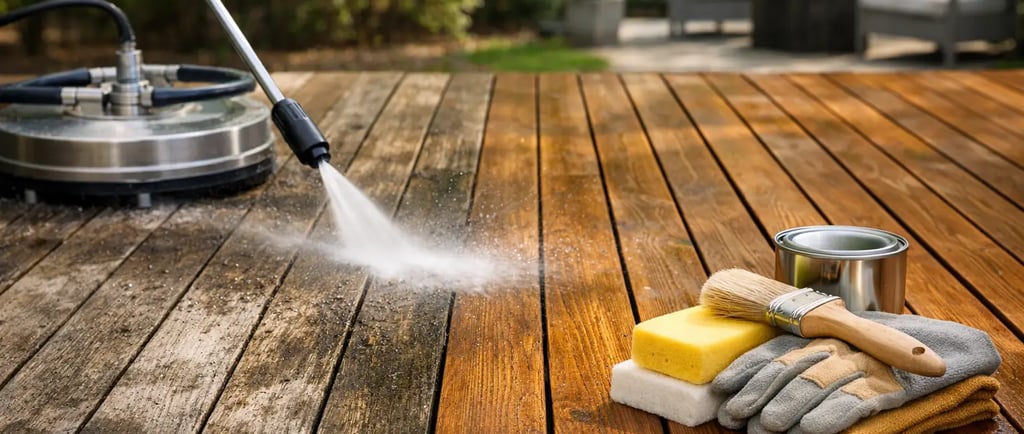
Deck Cleaning and Restoration That Lasts
A deck can start looking worn long before it is actually worn out. In North County San Diego, sun exposure, coastal moisture, foot traffic, barbecue spills, and algae buildup all work together to make a good deck look older than it is. That is why deck cleaning and restoration matters. Done the right way, it improves appearance, helps protect the surface, and can extend the life of the space you use for relaxing, hosting, and enjoying your home.
A lot of property owners wait until a deck looks gray, slippery, or heavily stained before doing anything about it. By then, the work usually takes more than a quick rinse. Surface grime may be hiding mildew, UV damage, embedded dirt, and failing coatings. The goal is not just to make the deck look cleaner for a week. The goal is to clean it safely, restore what can be restored, and leave the surface in better condition going forward.
What deck cleaning and restoration actually includes
People often use the terms interchangeably, but cleaning and restoration are not the same job. Cleaning removes dirt, algae, mildew, pollen, stains, and surface contaminants. Restoration goes further. It can include stripping old stain, brightening weathered wood, treating problem areas, and preparing the deck for sealing or staining.
That difference matters because the right approach depends on the deck material and its current condition. A lightly soiled composite deck may only need a careful wash with the proper solution and low pressure. An older wood deck with graying boards, dark mildew spots, and peeling stain may need a more involved process to get real results.
If the wrong method is used, especially too much pressure, the surface can be damaged fast. Wood fibers can fur up, grooves can be etched deeper, and composite boards can end up with permanent marks. What looks like aggressive cleaning can actually shorten the life of the deck.
Why decks in North County San Diego need regular attention
Our local climate is easier on decks than snow-heavy regions, but it still creates its own problems. Strong sun can dry out wood and fade finishes. Marine air and coastal moisture can encourage mildew and algae, especially in shaded areas. Inland dust, leaves, and everyday use add another layer of buildup.
Even when a deck does not look terrible from a distance, the surface can become slick and rough in patches. That is more than a cosmetic issue. Slippery growth and splintering boards make the space less safe for family, guests, and pets.
Routine care is usually more affordable than waiting for major restoration. A deck that gets cleaned before heavy buildup sets in is easier to maintain and more likely to hold stain or sealer properly when needed.
Signs your deck needs more than a basic wash
Some decks clean up nicely with a straightforward service. Others show clear signs that deeper restoration work is needed. If the boards look uneven in color, feel rough underfoot, or have blotchy dark staining, basic rinsing probably will not solve the problem. The same goes for surfaces with peeling coatings or areas where water no longer beads on the finish.
You may also notice that furniture leaves clean outlines when moved. That usually means the surrounding surface has built up a layer of oxidation, dirt, or organic growth. On wood decks, graying is another common sign. Gray wood is not always rotten, but it often means UV exposure has broken down the surface fibers and a simple spray-off will not bring back a healthy appearance.
Restoration is also worth considering if you plan to stain or seal the deck. Applying a new finish over dirty, weathered, or unevenly coated boards usually leads to disappointing results.
The right cleaning method depends on the surface
This is where experience matters. Wood and composite decking do not respond the same way to water pressure, cleaners, or restoration products.
Wood decks
Wood decks are the most common candidates for restoration because they can weather dramatically over time. Pressure has to be controlled carefully. Too little may not clean effectively, but too much can scar the boards and raise the grain. The right process often includes a cleaning solution to break down grime and organic growth, followed by a controlled rinse and, in some cases, a brightener to improve color and balance the wood before sealing.
Not every wood species behaves the same way either. Softer woods can mark more easily, while older boards may need an even gentler approach.
Composite decks
Composite decking is lower maintenance, but not no-maintenance. It still collects dirt, algae, grease, and tannin stains from leaves. Many owners assume they can just blast it clean, but that can leave streaks or damage the finish layer. Composite usually responds best to a surface-appropriate cleaner, soft brushing where needed, and a low-pressure rinse that removes buildup without harming the material.
Coated or painted decks
Decks with old paint or solid stain require extra care. If the coating is failing, cleaning may reveal how much is already loose. In those cases, the deck may need stripping or prep work before any refinishing can happen. There is no benefit in washing aggressively just to force off material unevenly.
Why pressure alone is not the answer
A lot of DIY deck damage starts with a rental pressure washer and good intentions. High pressure feels effective because the visual change is immediate, but visible results are not the same as safe results. Deck surfaces need the right mix of cleaning agents, dwell time, rinsing technique, and material awareness.
For example, algae and mildew are not always fully removed by water alone. They can come back quickly if the root of the buildup is left behind. Grease stains from cooking areas also need a different treatment than general dirt. Restoration work is rarely one-size-fits-all.
A professional approach focuses on cleaning enough to solve the problem without over-cleaning and damaging the surface. That balance is what protects your investment.
What to expect from professional deck cleaning and restoration
A good service starts with an honest assessment. Some decks only need cleaning. Others need stain removal, brightening, or prep for refinishing. A trustworthy contractor should tell you what is realistic and what is not. Not every deep stain comes out completely, and not every aging deck can be made to look new again. But many can be improved far more than homeowners expect.
The process usually begins with identifying the material, checking for damage, and selecting the right cleaning method. After that, built-up grime, mildew, algae, and surface staining are treated and rinsed away using methods appropriate for the deck. If restoration is part of the job, the next step may include brightening weathered wood or preparing the surface for a protective finish.
For homeowners in this area, the biggest benefit is often peace of mind. You want the deck cleaned thoroughly, but you also want railings, nearby landscaping, and adjacent surfaces treated with care. Companies like Clarity Pro Wash build trust by using property-appropriate methods instead of treating every surface the same.
How often should a deck be cleaned?
It depends on exposure and use. A shaded deck under trees may need attention more often because of leaf staining and organic growth. A sunny deck near the coast may deal more with moisture, salt air, and fading. In general, an annual cleaning is a smart baseline for many properties, with more frequent service if buildup is obvious or the deck gets heavy use.
Restoration is less frequent than cleaning. Most decks do not need full restoration every year, but they do benefit from periodic evaluation, especially if stain or sealer is failing. Staying ahead of that cycle usually keeps costs lower and results better.
When it makes sense to call a pro
If your deck is slippery, heavily stained, gray, peeling, or simply not responding to basic washing, it is worth getting a professional opinion. The same is true if you are preparing for entertaining season, listing a home, or trying to protect a deck that still has good years left in it.
The right service is not about making bold promises. It is about knowing which method fits the surface, doing the work carefully, and leaving you with a deck that looks cleaner, feels safer, and is better prepared for the months ahead.
A well-kept deck changes how the whole backyard feels. When the surface is clean, the color looks right, and the boards are ready for use again, the space stops feeling like another project and starts feeling like part of your home.
Contact Information
Ready to brighten your home’s exterior?
Call
© 2025. All rights reserved.
Whatever you do, work at it with all your heart, as working for the Lord, not for men. -Colossians 3:23