How Often Should Roofs Be Cleaned in San Diego?
Wondering how often should roofs be cleaned? Learn the ideal roof cleaning schedule for North County San Diego homes, warning signs to watch for, and when soft washing is the safest solution.
ROOF CLEANING
Damon Joao
7/16/20265 min read
How Often Should Roofs Be Cleaned in San Diego?
A roof can look fine from the driveway while algae, dust, leaf debris, and dark streaks are quietly building up on the surface. The question, “how often should roofs be cleaned,” does not have one answer for every property. In North County San Diego, the right schedule depends on your roof material, nearby trees, shade, coastal moisture, and how quickly organic growth returns.
For many local homes, professional roof cleaning every two to three years is a practical starting point. Some roofs need attention sooner, especially those under trees, near the coast, or in damp, shaded areas. Others may stay cleaner longer with regular gutter maintenance and plenty of sun exposure.
How Often Should Roofs Be Cleaned?
Most residential roofs benefit from a professional inspection at least once a year and cleaning as conditions call for it. Waiting until a roof is heavily blackened or covered in moss can make the job more difficult and may leave staining that takes longer to treat.
A reasonable cleaning schedule often looks like this:
Every 1 to 2 years for roofs with frequent shade, mature trees, coastal moisture, or visible algae growth.
Every 2 to 3 years for many tile and shingle roofs in typical inland North County neighborhoods.
Every 3 to 5 years for sunny, low-debris roofs that remain clear and are maintained consistently.
As needed after windstorms, extended wet weather, construction dust, or a long period of neglected gutter care.
The goal is not to clean a roof on a calendar just for the sake of it. It is to remove damaging buildup before it becomes a bigger maintenance issue. A clean roof improves curb appeal, but it also makes it easier to spot cracked tiles, displaced shingles, damaged flashing, and blocked drainage areas.
What Makes a Roof Get Dirty Faster?
San Diego County has a dry reputation, but roofs still deal with plenty of conditions that encourage buildup. Morning marine layer, seasonal rain, coastal air, Santa Ana winds, pollen, and windblown debris all affect how quickly a roof becomes stained.
Shade and Nearby Trees
Shade is one of the biggest reasons a roof develops algae, mildew, or moss. Areas beneath overhanging branches stay damp longer after rain or morning moisture. Leaves, seed pods, and small branches also collect in valleys and around roof penetrations, holding moisture against the surface.
If your home has eucalyptus, palm, pine, or other mature trees nearby, your roof may need cleaning more often than a home in an open, sunny neighborhood. Tree trimming can help reduce debris, but it does not eliminate the need for periodic roof care.
Coastal Moisture and Marine Layer
Homes in Carlsbad, Encinitas, Oceanside, and other coastal or near-coastal communities can experience more frequent moisture from marine layer conditions. That moisture gives algae and mildew a better environment to grow, particularly on north-facing roof sections that receive less direct sun.
Even a tile roof that appears dry by midafternoon may spend enough time damp in the morning to develop dark staining over time. Routine inspections are especially helpful for these properties.
Roof Material and Design
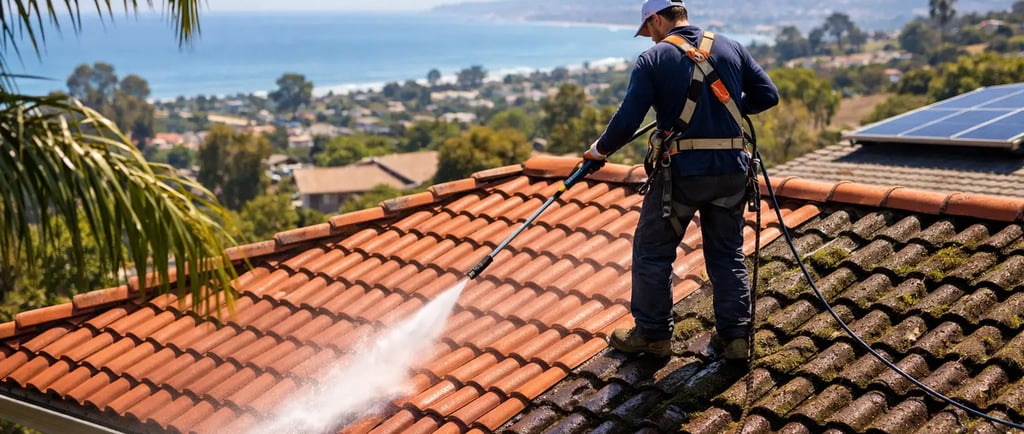
Tile roofs are common throughout North County San Diego and can collect dust, organic debris, and staining in the contours between tiles. Concrete and clay tile are durable, but individual tiles can crack if they are walked on carelessly or cleaned with methods that are too aggressive.
Asphalt shingle roofs need even more caution. High-pressure washing can remove protective granules and shorten the roof's service life. A proper soft wash treatment addresses organic staining without blasting the roofing material. Roof pitch, valleys, skylights, solar panels, and complex architectural features also affect how much debris collects and how safely the roof can be cleaned.
Signs Your Roof Needs Cleaning Before Its Usual Schedule
You do not need to climb onto the roof to know when it may be time for professional service. A ground-level look from several angles can reveal a lot. Dark streaks, green patches, visible moss, or dirt buildup along the lower edges of the roof are clear signs that cleaning should be considered.
Pay attention to gutters as well. If gutters are overflowing, packed with leaves, or showing plants growing from the debris, there is a good chance the roof has accumulated material that needs to be removed. Debris in roof valleys can redirect water and create unnecessary moisture exposure around the underlayment and flashing.
Other signs include a noticeably uneven roof color, buildup around vents and chimneys, and stains that return quickly after rain. These conditions do not always mean the roof is damaged, but they are worth addressing before they become harder to remove.
Why Method Matters More Than Pressure
Roof cleaning is not the same as cleaning a driveway. Concrete can handle far more pressure than shingles, tile, or delicate roof components. Using the wrong method may crack tiles, loosen shingles, force water where it does not belong, or strip away protective surface material.
For most roof surfaces, soft washing is the safer approach. Soft washing uses a low-pressure application process with cleaning solutions designed to break down algae, mold, mildew, and organic staining. The surface is treated carefully rather than aggressively blasted clean.
There is a trade-off worth understanding: a roof cleaning service that promises immediate results through high pressure may seem appealing, but the fast visual change can come with unnecessary risk. A careful soft wash process may require proper dwell time and attention to runoff protection, but it is designed to prioritize the roof itself, not just the after-photo.
Professional crews should also protect landscaping, manage runoff responsibly, and avoid walking on fragile areas whenever possible. For tile roofs in particular, experience matters. A technician needs to know where to step, which areas to avoid, and how to work around ridges, valleys, solar equipment, and roof-mounted accessories.
Can You Wait Until the Roof Looks Bad?
You can, but it is usually not the best value. Light staining and early organic growth are easier to treat than years of accumulated buildup. A roof that is maintained before heavy growth takes hold typically needs less intensive work and is easier to inspect afterward.
There is also the curb-appeal factor. Roof staining is highly visible, especially on lighter tile and shingle colors. It can make an otherwise well-maintained home look older than it is. For homeowners preparing to sell, refreshing the roof can make a meaningful difference in the overall first impression of the property.
For commercial properties, a stained roof may not be as visible to every customer, but roof and gutter maintenance still matters. Clean exterior surfaces support a professional appearance and help property managers avoid preventable drainage problems around storefronts, offices, and multifamily buildings.
Pair Roof Cleaning With Gutter Care
Roof cleaning and gutter cleaning work well together because debris rarely stays in one place. Leaves and roof sediment often move into gutters, downspouts, and drainage outlets. If the gutters remain clogged after a roof is cleaned, water may still back up where it should not.
At minimum, gutters should be checked before the rainy season and again when nearby trees have dropped a significant amount of debris. Properties with heavy tree cover may need more frequent service. Clean gutters help water move away from the roofline and reduce the chance of overflow staining on fascia, stucco, and walkways.
A Practical Roof-Care Plan for North County Homes
Start by looking at your roof from the ground twice a year, ideally before and after the rainy season. Watch for new streaking, debris in valleys, gutter overflow, and changes in color. If you see early growth, do not assume it will disappear on its own once the weather turns dry.
Then schedule professional cleaning based on what your roof is showing, not just on the date of the last service. For many homeowners, that means every two to three years. For shaded, coastal, or tree-covered homes, it may mean every year or two. A trusted local professional can assess the material, buildup, roof access, and safest cleaning method before work begins.
Clarity Pro Wash provides property-appropriate soft washing for North County San Diego roofs, with the care needed for tile, shingle, and other delicate exterior surfaces. A free estimate can help you plan maintenance before stains and debris turn into a larger project.
A clean roof is easiest to maintain when small issues are handled early. Keep an eye on the surface, clear the gutters, and choose a cleaning method that protects the roof you have worked hard to maintain.