How to Clean Stucco Exterior Safely
Too much pressure on stucco can etch the finish, crack weak spots, and force water behind walls. Learn how to clean stucco exterior safely — the right tools, methods, and stain treatments that protect instead of damage.
EXTERIOR CLEANING
Damon Joao
6/21/20265 min read
How to Clean Stucco Exterior Safely
Stucco can make a home look clean, solid, and well cared for - right up until dirt, algae, and mildew start settling into the texture. Then it goes from sharp curb appeal to dingy fast. If you are wondering how to clean stucco exterior safely, the biggest thing to understand is that stucco is durable, but its finish can still be damaged by too much pressure, harsh scrubbing, or the wrong cleaning solution.
Around North County San Diego, stucco takes a beating from coastal moisture, windblown dust, irrigation overspray, and organic growth in shaded areas. A quick blast with a pressure washer might seem like the easiest fix, but that is where a lot of homeowners accidentally etch the surface, force water behind cracks, or leave visible streaking. Safe cleaning is less about brute force and more about using the right method for the condition of the wall.
Why stucco needs a careful approach
Stucco is not a smooth, sealed material like painted metal or vinyl siding. It is porous, textured, and often finished with paint or color coat that can wear over time. That means grime tends to lodge in the surface, and aggressive cleaning can strip away more than the dirt.
Hairline cracks are another factor. Even minor cracks can let water into places it should not go if high pressure is used too closely. On older homes, previous repairs, faded coatings, and sun exposure can make one section of wall more fragile than another. What works on one side of the house may be too aggressive on another.
This is why professional exterior cleaning companies usually treat stucco as a soft wash surface, not a high-pressure surface. The goal is to loosen and remove buildup while protecting the finish underneath.
How to clean stucco exterior safely without causing damage
Start with a visual inspection before you touch a hose. Look for cracks, crumbling spots, loose areas, stained runoff beneath gutters, and signs of mildew or algae. If the stucco is actively failing, cleaning will not fix the real issue, and introducing more water can make it worse.
Next, protect the surrounding area. Pre-wet plants, cover delicate electrical fixtures if needed, and move patio furniture or decor away from the wall. Exterior cleaning solutions can affect landscaping if they are allowed to dry on leaves, especially on warm days.
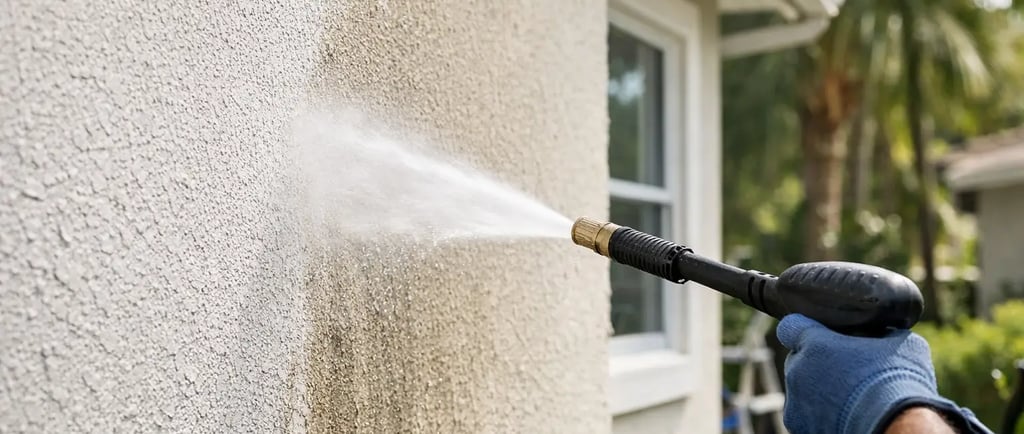
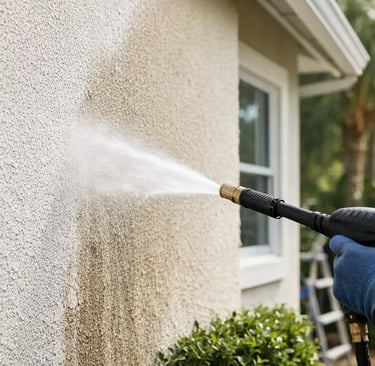
Once the area is ready, rinse the stucco gently with low pressure. This initial rinse helps cool the surface, remove loose dust, and prepare the wall for a cleaning mix. Keep the spray angle controlled and avoid forcing water upward under trim, vents, or cracked sections.
After that, apply an appropriate cleaning solution. For general dirt and organic staining, a soft wash detergent designed for exterior surfaces is usually the safest choice. The exact product matters less than the approach. You want something effective enough to break down algae, mildew, and grime, but not so strong that it damages painted finishes or nearby plants.
Give the solution time to dwell. This is where many people rush. If you spray and immediately rinse, you often end up relying on pressure to do the work. Letting the cleaner sit for the recommended time helps lift staining so the rinse can stay gentle.
Then rinse thoroughly with low pressure from top to bottom. Work in sections and watch the runoff. If dirt is still clinging in deep texture, it is usually better to repeat the treatment than to move closer with more force.
The biggest mistakes homeowners make
The most common mistake is using too much pressure. A pressure washer is not automatically wrong for stucco, but the margin for error is small. High pressure can scar the finish, blow out weak spots, and drive water into cracks or behind the wall system.
The second mistake is scrubbing too aggressively with a stiff brush. Light agitation can help in isolated trouble spots, but hard scrubbing on painted or aging stucco can leave shiny areas, remove coating, or create uneven color.
Another issue is using the wrong chemical. Bleach-heavy mixes, acidic cleaners, or strong degreasers can all create problems depending on the surface and stain type. What removes rust from concrete, for example, may ruin a stucco finish. Safe cleaning always depends on matching the treatment to the stain.
Finally, many homeowners clean in full midday sun. That sounds harmless, but hot walls can cause cleaning solutions to dry too quickly and leave streaks. Early morning or cooler parts of the day are usually a better choice.
What tools and methods are safest for stucco
For most homes, the safest setup includes a garden hose or low-pressure washing system, a pump sprayer or soft wash application method, a mild exterior cleaner, and a soft-bristle brush for limited spot treatment. That approach gives you control.
If you do use a pressure washer, keep it on a low setting with a wide-angle tip and maintain plenty of distance from the wall. Even then, caution matters. The machine should be assisting the rinse, not acting like a stripping tool.
Soft washing is generally the better method for stucco because it relies on cleaning solution and low-pressure rinsing instead of force. That is especially important on painted stucco, older stucco, and homes with visible cracks or patchwork repairs.
Different stains need different treatment
Not every dirty-looking wall has the same problem. Black or green discoloration is often algae or mildew, especially on shaded elevations. These stains usually respond well to a soft wash treatment designed to kill and remove organic growth.
Brown or orange staining may be tied to rust from metal fixtures, irrigation, or fasteners. That can require specialty treatment, and this is one of the areas where DIY work gets risky. Rust removers can be harsh, and using the wrong one can bleach or etch the wall.
Dark vertical lines below gutters or roof edges are often runoff stains caused by overflowing water mixed with dirt. Cleaning helps, but if the drainage issue is not corrected, the stains will come back.
General gray film or dusty buildup is the simplest case. In that situation, a light wash with the right detergent and low-pressure rinse is often enough to restore the finish without much agitation.
When DIY makes sense - and when it does not
If the stucco is in good condition, the staining is light, and you have the ability to work safely from the ground, a careful DIY cleaning can be reasonable. The key is staying conservative. Low pressure, proper cleaner, small test area first.
But there are times when calling a professional is the smarter move. Multi-story walls, heavy algae, visible cracking, oxidation, rust stains, or areas around delicate landscaping all raise the stakes. The same goes for commercial buildings where appearance matters and uneven results are hard to hide.
A professional soft wash service can usually clean more thoroughly while reducing the risk of surface damage. That is not just about equipment. It is about knowing how different finishes respond, how long cleaners should dwell, and when a stain needs a specialty approach instead of more pressure.
For property owners in coastal and inland North County, that experience matters because local conditions vary. A shaded stucco wall in Encinitas may deal with more moisture-driven growth, while a home in San Marcos or Escondido may show more dust and sprinkler staining. The safe method still starts the same way: protect the surface first.
How often should stucco be cleaned?
Most homes do well with a professional exterior wash every year or two, but there is no perfect schedule for every property. It depends on tree coverage, irrigation, traffic dust, marine air, and how quickly organic growth shows up on shaded sides of the home.
If you notice green patches, dark streaks, or a dull film that does not rinse away with a hose, it is probably time. Waiting too long usually means the cleaning gets more involved, not less.
Routine maintenance is easier on stucco than infrequent aggressive cleaning. That is one reason many homeowners prefer a soft wash maintenance approach. It keeps the exterior looking cared for without treating the wall like a surface that can handle punishment.
A clean stucco exterior should look fresh, even, and well kept - not worn down by the cleaning process itself. If you are trying to protect curb appeal and the life of the finish, the safest path is simple: use low pressure, use the right cleaner, and do not force a result that should come from proper treatment. When there is any doubt, getting experienced help is often the most cost-effective way to avoid turning a cleaning project into a repair project.