How to Pressure Wash Concrete Without Damage
Learn how to pressure wash concrete without damage safely, remove stains, protect nearby surfaces, and keep San Diego driveways, patios, and walkways looking their best year-round.
PRESSURE WASHING
Damon Joao
7/19/20265 min read
How to Pressure Wash Concrete Without Damage
A clean driveway can change the way an entire property looks from the street. But learning how to pressure wash concrete is about more than pointing a powerful stream at a dirty slab. Too much pressure, the wrong nozzle, or uneven technique can leave permanent wand marks, expose aggregate, or damage nearby stucco, landscaping, and fixtures.
For North County San Diego homeowners, concrete often collects a mix of dust, vehicle drips, irrigation stains, algae in shaded areas, and coastal moisture residue. With the right preparation and a measured approach, pressure washing can restore a brighter, more cared-for appearance without creating new problems.
Before You Pressure Wash Concrete, Check the Surface
Concrete is durable, but it is not indestructible. Start by looking for cracks, loose sections, flaking sealer, crumbling edges, or exposed aggregate. Pressure washing will not repair these conditions, and aggressive cleaning may make them more noticeable.
New concrete also needs time to cure. If the slab was poured recently, wait until it has fully cured according to the installer or concrete manufacturer's recommendation. Cleaning too early can weaken the surface or interfere with curing.
It also helps to identify what is actually on the concrete. General gray buildup and dirt respond well to water and pressure. Green or black organic growth may need a concrete-safe cleaning solution before rinsing. Oil spots usually require a degreaser and dwell time. Rust, hard-water stains, and paint often need specialty products and may not come out with pressure alone.
Gather the Right Equipment for the Job
A homeowner-grade pressure washer can handle many patios, walkways, and small driveways when used carefully. For larger areas or deeply embedded grime, professional equipment provides more consistent results, but higher output also raises the risk of surface damage in inexperienced hands.
You will need a pressure washer, a garden hose, a stiff deck brush, safety glasses, closed-toe shoes, and appropriate cleaning products for the stains present. A surface cleaner attachment is especially useful for broad, flat areas. It keeps the spray at a consistent distance and reduces the striping that commonly appears when cleaning with a wand alone.
Avoid starting with a zero-degree nozzle. Its narrow, concentrated stream can scar concrete quickly. A 25-degree or 40-degree fan tip is generally a safer place to start for rinsing and lighter cleaning. If you use a surface cleaner, make sure its pressure and flow requirements match your machine.
Before beginning, move vehicles, furniture, planters, and loose items away from the work area. Cover or thoroughly wet delicate plants, close nearby windows and doors, and keep the stream away from electrical outlets, garage door seals, wood trim, and painted surfaces. Make sure runoff will not carry cleaners into storm drains.
How to Pressure Wash Concrete Step by Step
Start by sweeping the concrete thoroughly. Sand, leaves, pebbles, and loose debris can interfere with cleaning and may become projectiles under pressure. Pre-rinse the surface with a light spray to remove loose dust and cool hot concrete on warm San Diego days.
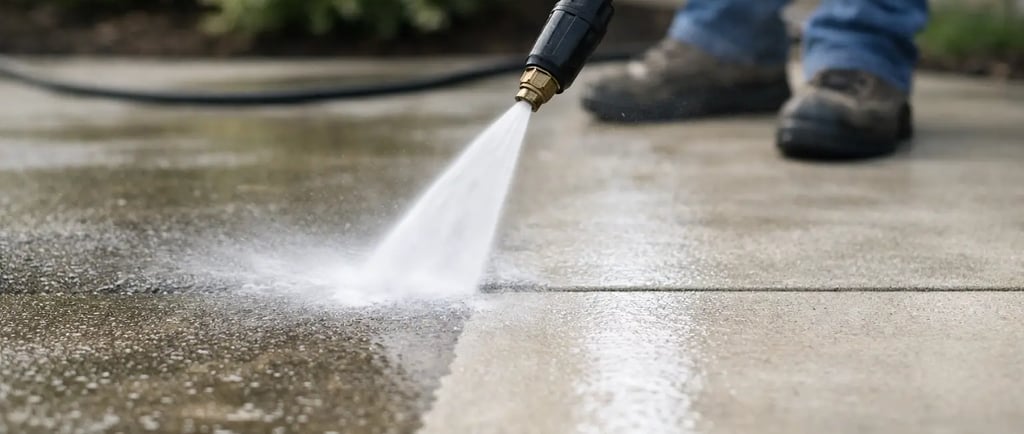
For ordinary dirt, test a small, less-visible section first. Hold the nozzle about 12 to 18 inches from the surface, then begin with a broad, steady pass. Keep the wand moving at all times. Stopping in one spot or cleaning too close to the slab is how visible lines and etched marks happen.
Work in manageable sections, overlapping each pass slightly. Move from the higher part of the driveway or patio toward the lower drainage area so dirty water does not run back over freshly cleaned concrete. Keep a consistent pace. Slow, controlled passes are more effective than repeatedly blasting the same area.
A surface cleaner is the best choice for a large driveway, pool deck, or sidewalk. Walk it evenly across the concrete in overlapping lanes, similar to mowing a lawn. Afterward, use the wand with a wide fan tip to rinse edges, corners, and places the attachment cannot reach.
Do not expect every stain to disappear in the first pass. Repeated aggressive pressure is rarely the right answer. If a spot remains, stop and treat the stain based on its cause rather than increasing pressure until the concrete is damaged.
Treat Stains Before the Final Rinse
Stain treatment is where the job becomes more specific. Apply a concrete-safe degreaser to vehicle oil spots, let it dwell as directed, then agitate it with a stiff brush before rinsing. Older oil stains may lighten substantially but can remain visible because the oil has penetrated below the surface.
For algae, mildew, and other organic staining, use a product designed for exterior concrete and follow the label closely. Pre-wet nearby plants, avoid overspray, and rinse thoroughly after the recommended dwell time. Never mix cleaning chemicals, especially acidic products and bleach-based products. Mixing cleaners can create dangerous fumes and damage the surface.
Rust and orange irrigation stains can be stubborn in areas with mineral-heavy water. These typically need a purpose-made rust remover, not more pressure. Paint, tire marks, and efflorescence also call for different approaches. The right product and technique depend on the stain, the age of the concrete, and whether the surface has been sealed.
Avoid the Most Common Concrete Cleaning Mistakes
The biggest mistake is assuming more pressure always means a better clean. On older concrete, high pressure can remove weak top layers and leave a rough, patchy finish. On newer decorative concrete, it can dull the appearance or damage color hardeners and sealers.
Uneven cleaning is another common issue. If you clean only the darkest areas, the treated spots may look noticeably brighter than the surrounding concrete. For the most uniform result, clean the entire slab or blend outward from treated areas with broad, even passes.
Be careful near expansion joints, cracks, and slab edges. Those areas are more vulnerable to chipping. Also avoid pushing runoff toward a garage, foundation vent, pool, or landscape bed. Pressure washing should improve your property, not create drainage or cleanup issues elsewhere.
Finally, do not pressure wash every surface the same way. Concrete can usually tolerate more pressure than stucco, painted siding, wood, roof tile, or shingle roofing. Those materials require lower-pressure methods, and many are best cleaned with a professional soft wash process.
When a Professional Concrete Cleaning Is Worth It
A do-it-yourself wash makes sense for a small patio with light soil buildup and no difficult stains. It may not be the best use of your weekend when the driveway is large, heavily stained, unevenly weathered, or surrounded by sensitive landscaping and exterior finishes.
Professional cleaning is also a smart choice for commercial sidewalks, storefront approaches, parking areas, and HOA common spaces. These areas often need consistent results, proper runoff management, and scheduling that limits disruption for residents, customers, or employees.
Clarity Pro Wash helps homeowners and businesses across North County San Diego clean concrete with property-appropriate methods, clear communication, and attention to the surfaces around the work area. A professional assessment can be particularly helpful when you are dealing with oil, rust, algae, irrigation staining, or concrete that has been sealed or previously damaged.
Keep Concrete Cleaner Between Washes
After the concrete has dried completely, consider whether a quality penetrating sealer is appropriate. Sealing can help limit moisture absorption and make future cleanup easier, but it is not necessary for every slab. Existing sealers, decorative finishes, and the condition of the concrete all affect the right choice.
Between deep cleanings, sweep regularly, address fresh oil drips quickly, and keep sprinklers aimed away from driveways and patios. Trim back plants that hold moisture against shaded walkways. Small maintenance habits help prevent the dark buildup that makes concrete look neglected long before the rest of the property does.
The goal is not to make worn concrete look brand new at any cost. It is to clean it evenly, protect its surface, and keep your property looking cared for from the curb to the backyard.