Roof Algae Treatment That Actually Lasts
Roof algae treatment safely removes black streaks and helps protect shingles and tile roofs from premature wear. Learn what cleaning methods work, what to avoid, and when to hire a professional for safe, effective results
ROOF CLEANING
Damon Joao
7/3/20265 min read
Roof Algae Treatment That Actually Lasts
Those black streaks on a roof usually do not mean the roof is failing. In many cases, they point to algae growth, and the right roof algae treatment can remove the staining without damaging the surface underneath. What matters most is not just getting the roof to look clean again, but using a method that fits the roofing material and addresses the growth safely.
In North County San Diego, roofs deal with more than sun. Morning moisture, coastal air, shade patterns, and debris buildup can all create conditions where algae takes hold. Homeowners often notice it first on the north-facing side of the roof or in areas that stay damp longer. The streaks may start small, then spread until the whole roof looks older and dirtier than it really is.
What roof algae really is
Roof algae is commonly tied to a dark organism that feeds on the filler materials in some roofing products and leaves visible black staining behind. On asphalt shingles, this is especially common. On tile roofs, you may also see a mix of algae, mold, mildew, and general organic buildup. From the ground, it can all look the same, but the cleaning approach should not.
That distinction matters because not every roof stain should be treated with the same level of pressure, the same cleaning mix, or the same rinse process. A method that might be too aggressive for shingles could still be wrong for older tile, fragile ridge caps, or areas with existing wear. Good roof cleaning is less about force and more about proper treatment.
Why the wrong roof algae treatment causes problems
A lot of roof damage happens during cleaning, not before it. High-pressure washing can dislodge granules from asphalt shingles, force water under roofing materials, crack tile edges, and shorten the life of the roof. It may make the surface look better for a moment, but the trade-off can be expensive.
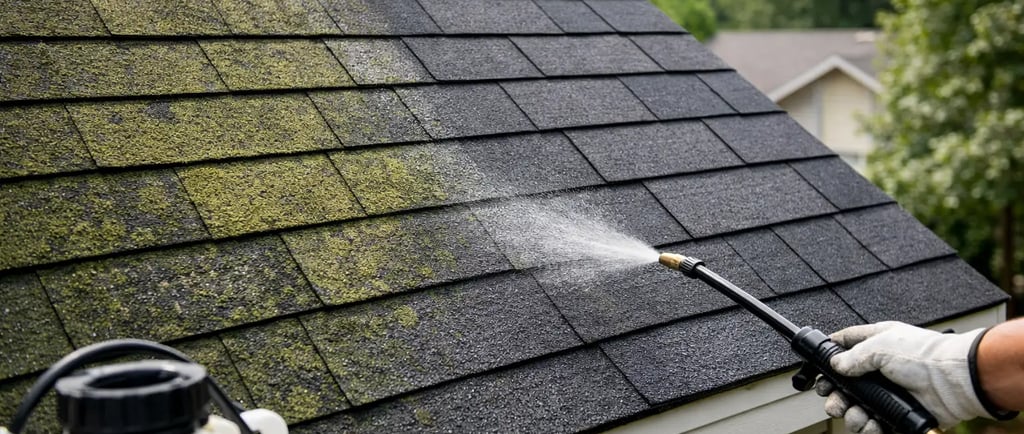
That is why professional roof algae treatment usually relies on soft washing instead of pressure washing. Soft washing uses low pressure and purpose-built cleaning solutions to kill algae at the root and lift staining with far less risk to the roof. It is a safer fit for delicate materials and a better long-term solution than simply blasting the surface clean.
There is still some nuance here. Not every roof needs the same dwell time, mix strength, or follow-up rinse. Heavier growth may require a stronger treatment plan, while an older roof may need a more careful approach. The best results come from matching the process to the condition of the roof, not from using one method on every house.
How professional roof algae treatment works
A proper cleaning starts with inspection. The roof material, pitch, age, staining level, surrounding landscaping, and drainage all affect how the job should be handled. A contractor should be looking at more than the black streaks. They should also be checking for loose tiles, brittle shingles, clogged gutters, and areas where runoff needs to be managed carefully.
Once the roof is assessed, the treatment is applied with low pressure. The solution is designed to break down organic growth and kill the algae, not just lighten the stain. On some roofs, the visual change is immediate. On others, especially where staining has been there for a while, the roof continues to brighten gradually after treatment as weather helps rinse away the dead organic material.
That slower improvement can actually be a good sign. It often means the roof was treated correctly instead of being forced clean with damaging pressure. Homeowners sometimes expect instant results because they are used to seeing pressure washing on concrete or driveways. Roofs are different. The priority is surface protection first, appearance second, even though both matter.
Roof algae treatment for shingles vs. tile
Asphalt shingles and tile roofs should never be treated as if they are interchangeable. Shingles depend on their surface granules for protection. Once those granules are stripped away, the roof becomes more vulnerable to UV exposure and wear. Tile is more durable in some ways, but it can crack, shift, or allow water intrusion if walked carelessly or cleaned too aggressively.
For shingle roofs, soft washing is generally the standard because it removes the algae while preserving the roofing material. For tile roofs, soft washing is also commonly the safest route, but the technician still needs to consider the type of tile, underlayment condition, and traffic pattern on the roof. A clay or concrete tile roof may look tough from the street, but individual tiles can still be fragile underfoot.
This is one reason experience matters. A roof algae treatment that is safe on one property in San Marcos may need adjustment for a different roof in Encinitas or Oceanside, where moisture exposure, salt air, and shade conditions are different. Local conditions change how quickly algae returns and how carefully runoff should be managed around landscaping.
Can you do it yourself?
Some homeowners are tempted to handle roof algae with store-bought cleaners or rented equipment. The appeal is obvious. It seems faster and cheaper at first. But roof cleaning has two major risks: fall hazards and surface damage.
Even setting safety aside, DIY treatment often misses the real problem. A light cleaner may brighten the surface without killing the full growth. A stronger product may be applied unevenly or without protecting nearby plants. Pressure equipment adds another layer of risk because it is easy to use too much force before realizing the roof is being damaged.
If the staining is minor and the roof is easy to access, some homeowners can spot-treat with care. But once the algae is spread across a large area, the roof is steep, or the material is delicate, professional service is usually the smarter choice. Paying for the right treatment is often less expensive than paying for avoidable roof repairs.
How long does roof algae treatment last?
It depends on the roof, the environment, and how much shade and moisture the property gets. A roof in full sun may stay clean longer than one under overhanging trees. A home closer to the coast may deal with different moisture patterns than one farther inland. Gutters also matter. If they are clogged and causing overflow, they can contribute to recurring staining along roof edges.
In many cases, a professional treatment gives results that last for years, not months. But no roof stays clean forever. Algae is part of the environment, and some roofs are simply more prone to regrowth. The goal is not permanent prevention. The goal is safe removal, a strong reset in curb appeal, and a maintenance plan that makes sense for the property.
For some homeowners, that means scheduling roof cleaning only when staining becomes noticeable again. For others, especially those preparing to sell or trying to protect a high-visibility property, more regular exterior maintenance makes sense. The right timing depends on budget, roof condition, and how important appearance is to the owner.
When to schedule roof algae treatment
The best time is usually when the staining is visible but before buildup becomes heavy. Early treatment is often easier on the roof and can help restore a cleaner look faster. Waiting too long may allow more organic growth to spread and make the roof look much older than it is.
It also helps to think beyond the roof alone. If the house exterior, gutters, driveway, or patio are showing the same kind of buildup, it may be worth coordinating those services at the same time. A clean roof stands out in a good way, but the biggest curb appeal improvement often comes when the whole exterior looks cared for.
For property owners who want dependable results without guesswork, working with a company that understands soft washing is the key. Clarity Pro Wash serves North County San Diego with cleaning methods built around the surface, not just the stain. That is the difference between a roof that looks temporarily cleaner and one that is treated the right way.
If your roof has black streaks, the best next step is simple: address it before it turns into a bigger eyesore or a preventable maintenance issue. A careful roof algae treatment can restore the look of the home while helping protect one of its most important surfaces.